Grade: 310S/310H
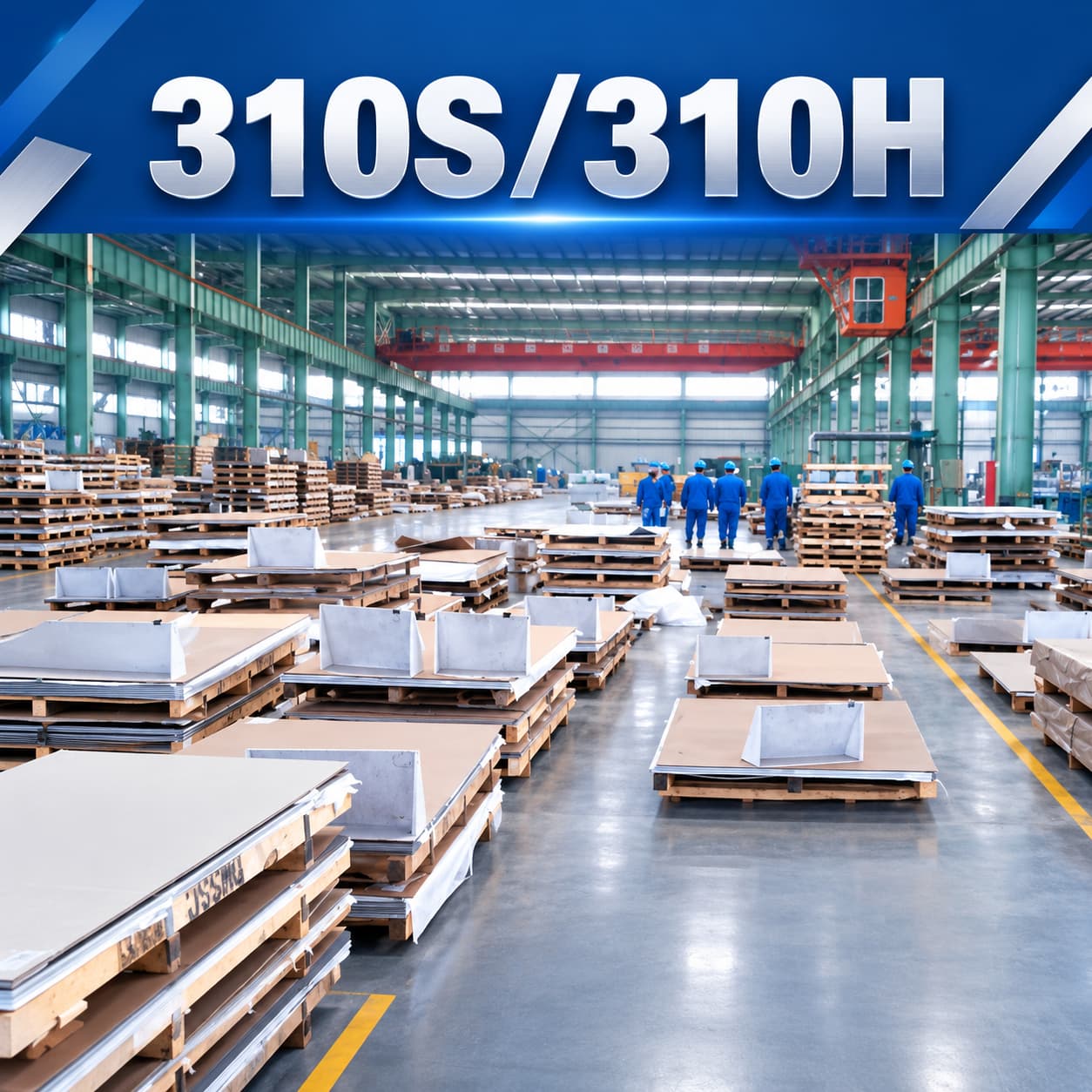
310S and 310H stainless steels are high-alloy austenitic stainless steels specifically developed for high-temperature service environments. Both grades contain high chromium (24–26%) and nickel (19–22%) contents, providing excellent oxidation resistance, carburization resistance, and corrosion resistance at elevated temperatures. They maintain good structural stability and mechanical strength under continuous exposure to high heat, making them suitable for applications where conventional stainless steels cannot perform reliably.
The main difference between 310S and 310H is their carbon content. 310S is a low-carbon version (C ≤ 0.08%) designed to improve weldability and minimize the risk of intergranular corrosion after welding or prolonged heating. 310H has a higher carbon content (0.04–0.10%) and is specifically optimized for high-temperature strength and creep resistance. The higher carbon level enhances strength retention at elevated temperatures, making 310H preferred for pressure-containing equipment and components operating under long-term high-temperature stress.
Both grades exhibit excellent fabrication characteristics, including good weldability, formability, and resistance to thermal cycling. They are widely used in furnace systems, petrochemical plants, power generation equipment, and other industries requiring reliable performance in extreme temperature conditions.
Chemical Composition (Typical ASTM A240 / ASTM A312)
| Element | 310S (UNS S31008) wt.% | 310H (UNS S31009) wt.% |
| Carbon (C) | ≤ 0.08 | 0.04 – 0.10 |
| Silicon (Si) | ≤ 1.50 | ≤ 1.50 |
| Manganese (Mn) | ≤ 2.00 | ≤ 2.00 |
| Phosphorus (P) | ≤ 0.045 | ≤ 0.045 |
| Sulfur (S) | ≤ 0.030 | ≤ 0.030 |
| Chromium (Cr) | 24.00 – 26.00 | 24.00 – 26.00 |
| Nickel (Ni) | 19.00 – 22.00 | 19.00 – 22.00 |
| Molybdenum (Mo) | ≤ 0.75 | ≤ 0.75 |
| Iron (Fe) | Balance | Balance |
Mechanical Properties (Annealed Condition)
| Property | 310S | 310H |
| Tensile Strength | ≥ 515 MPa (≥75 ksi) | ≥ 515 MPa (≥75 ksi) |
| Yield Strength (0.2% Offset) | ≥ 205 MPa (≥30 ksi) | ≥ 205 MPa (≥30 ksi) |
| Elongation | ≥ 40% | ≥ 40% |
| Hardness (Brinell) | ≤ 217 HB | ≤ 217 HB |
| Hardness (Rockwell B) | ≤ 95 HRB | ≤ 95 HRB |
| Density | Approx. 8.0 g/cm³ | Approx. 8.0 g/cm³ |
| Modulus of Elasticity | Approx. 200 GPa | Approx. 200 GPa |
| High Temperature Strength | Good | Superior (higher creep strength) |
310S Applications
- Furnace components and furnace liners
- Heat treatment equipment
- Kiln parts and kiln liners
- Burner components
- Heat exchangers
- High-temperature piping systems
- Chemical processing equipment
- Petrochemical processing equipment
- Thermal oxidation equipment
- Food processing heat treatment equipment
- Combustion chambers
310H Applications
- High-temperature pressure vessels
- Petrochemical furnace tubes
- Steam cracking furnace components
- Refinery processing equipment
- Power plant boiler components
- Superheater and reheater tubes
- High-temperature heat exchangers
- Pressure-containing components operating above 600°C
- Creep-resistant structural components
Chemical processing equipment exposed to prolonged heat
310S and 310H stainless steels are high-alloy austenitic stainless steels specifically developed for high-temperature service environments. Both grades contain high chromium (24–26%) and nickel (19–22%) contents, providing excellent oxidation resistance, carburization resistance, and corrosion resistance at elevated temperatures. They maintain good structural stability and mechanical strength under continuous exposure to high heat, making them suitable for applications where conventional stainless steels cannot perform reliably.
The main difference between 310S and 310H is their carbon content. 310S is a low-carbon version (C ≤ 0.08%) designed to improve weldability and minimize the risk of intergranular corrosion after welding or prolonged heating. 310H has a higher carbon content (0.04–0.10%) and is specifically optimized for high-temperature strength and creep resistance. The higher carbon level enhances strength retention at elevated temperatures, making 310H preferred for pressure-containing equipment and components operating under long-term high-temperature stress.
Both grades exhibit excellent fabrication characteristics, including good weldability, formability, and resistance to thermal cycling. They are widely used in furnace systems, petrochemical plants, power generation equipment, and other industries requiring reliable performance in extreme temperature conditions.
Chemical Composition (Typical ASTM A240 / ASTM A312)
| Element | 310S (UNS S31008) wt.% | 310H (UNS S31009) wt.% |
| Carbon (C) | ≤ 0.08 | 0.04 – 0.10 |
| Silicon (Si) | ≤ 1.50 | ≤ 1.50 |
| Manganese (Mn) | ≤ 2.00 | ≤ 2.00 |
| Phosphorus (P) | ≤ 0.045 | ≤ 0.045 |
| Sulfur (S) | ≤ 0.030 | ≤ 0.030 |
| Chromium (Cr) | 24.00 – 26.00 | 24.00 – 26.00 |
| Nickel (Ni) | 19.00 – 22.00 | 19.00 – 22.00 |
| Molybdenum (Mo) | ≤ 0.75 | ≤ 0.75 |
| Iron (Fe) | Balance | Balance |
Mechanical Properties (Annealed Condition)
| Property | 310S | 310H |
| Tensile Strength | ≥ 515 MPa (≥75 ksi) | ≥ 515 MPa (≥75 ksi) |
| Yield Strength (0.2% Offset) | ≥ 205 MPa (≥30 ksi) | ≥ 205 MPa (≥30 ksi) |
| Elongation | ≥ 40% | ≥ 40% |
| Hardness (Brinell) | ≤ 217 HB | ≤ 217 HB |
| Hardness (Rockwell B) | ≤ 95 HRB | ≤ 95 HRB |
| Density | Approx. 8.0 g/cm³ | Approx. 8.0 g/cm³ |
| Modulus of Elasticity | Approx. 200 GPa | Approx. 200 GPa |
| High Temperature Strength | Good | Superior (higher creep strength) |
310S Applications
- Furnace components and furnace liners
- Heat treatment equipment
- Kiln parts and kiln liners
- Burner components
- Heat exchangers
- High-temperature piping systems
- Chemical processing equipment
- Petrochemical processing equipment
- Thermal oxidation equipment
- Food processing heat treatment equipment
- Combustion chambers
310H Applications
- High-temperature pressure vessels
- Petrochemical furnace tubes
- Steam cracking furnace components
- Refinery processing equipment
- Power plant boiler components
- Superheater and reheater tubes
- High-temperature heat exchangers
- Pressure-containing components operating above 600°C
- Creep-resistant structural components
Chemical processing equipment exposed to prolonged heat