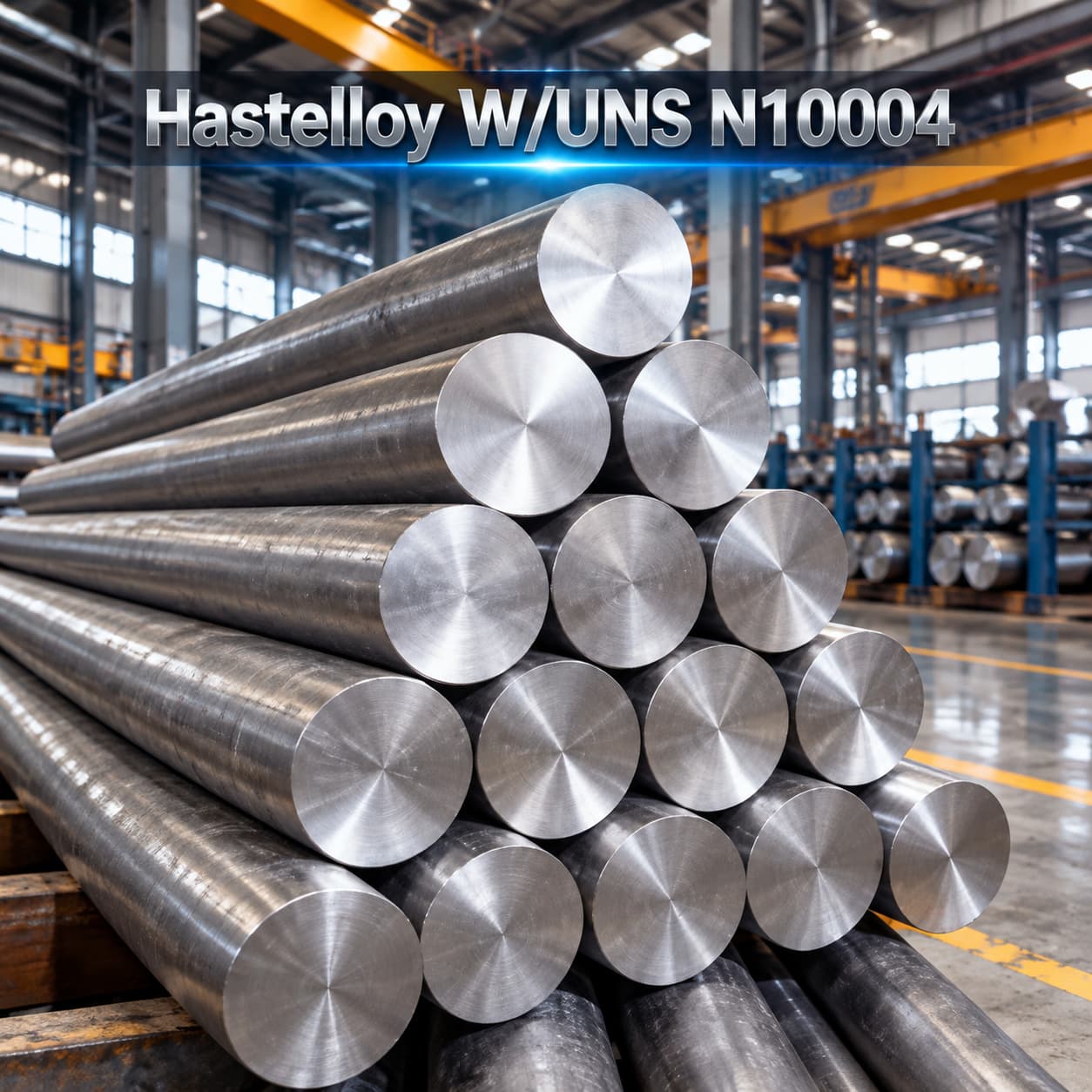
Grade: Hastelloy W/UNS N10004/Alloy W
Hastelloy W alloy (UNS N10004) is a solid-solution-strengthened super alloy that was developed primarily as a filler metal for welding of dissimilar alloys. It displays excellent dissimilar welding characteristics, and is widely used for that purpose in the gas turbine and aerospace industries. The properties of dissimilar weld joints made with alloy W are dependents upon the alloys joined, but are generally acceptable for a wide variety of combinations. Alloy W is also used as a wrought alloy for a limited number of ring-type Applications in older gas turbine engines. Haynes 242 alloy is a more modern alloy, and should be considered as a substitute for alloy W in these ring Applications.
| Alloy | C | Si | Mn | P | S | Cr | Ni | Co | Mo | W | V | Fe |
| Hastelloy W | ≤0.12 | ≤1.00 | ≤1.00 | ≤0.04 | ≤0.03 | 4.0-6.0 | Bal | ≤2.5 | 23.0-26.0 | ≤1.00 | ≤0.06 | 4.0-7.0 |
| Density, g/cm3 | Melting Point, ℃ | Tensile Strength, MPa | Yield Strength, MPa | ELongation, % | Hardness, HRB |
| 9.00 | 1290-1375 | 965 | 520 | 51 | / |
Hastelloy W alloy (UNS N10004) is a solid-solution-strengthened super alloy that was developed primarily as a filler metal for welding of dissimilar alloys. It displays excellent dissimilar welding characteristics, and is widely used for that purpose in the gas turbine and aerospace industries. The properties of dissimilar weld joints made with alloy W are dependents upon the alloys joined, but are generally acceptable for a wide variety of combinations. Alloy W is also used as a wrought alloy for a limited number of ring-type Applications in older gas turbine engines. Haynes 242 alloy is a more modern alloy, and should be considered as a substitute for alloy W in these ring Applications.
| Alloy | C | Si | Mn | P | S | Cr | Ni | Co | Mo | W | V | Fe |
| Hastelloy W | ≤0.12 | ≤1.00 | ≤1.00 | ≤0.04 | ≤0.03 | 4.0-6.0 | Bal | ≤2.5 | 23.0-26.0 | ≤1.00 | ≤0.06 | 4.0-7.0 |
| Density, g/cm3 | Melting Point, ℃ | Tensile Strength, MPa | Yield Strength, MPa | ELongation, % | Hardness, HRB |
| 9.00 | 1290-1375 | 965 | 520 | 51 | / |
Related products
-
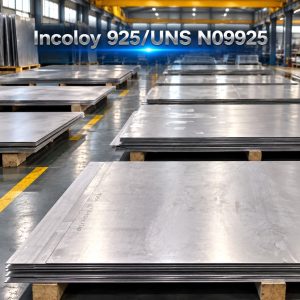
Incoloy
Alloy 925 / UNS N09925
-
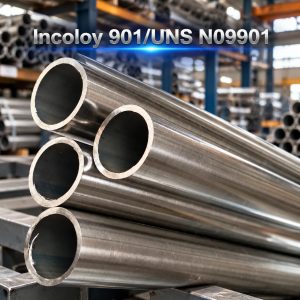
Incoloy
Alloy 901 / UNS N09901
-
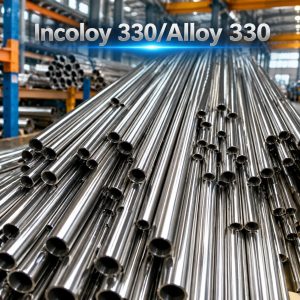
Incoloy
Alloy 330/Incoloy 330
-
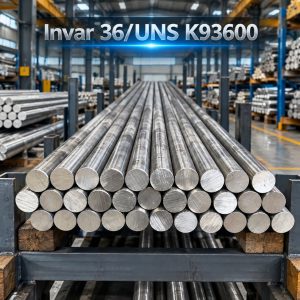
Nickel Alloy
Alloy 36/UNS K93600
-
Nickel Alloy
Kovar/UNS K94610
-
Hastelloy
Alloy C22/UNS N06022