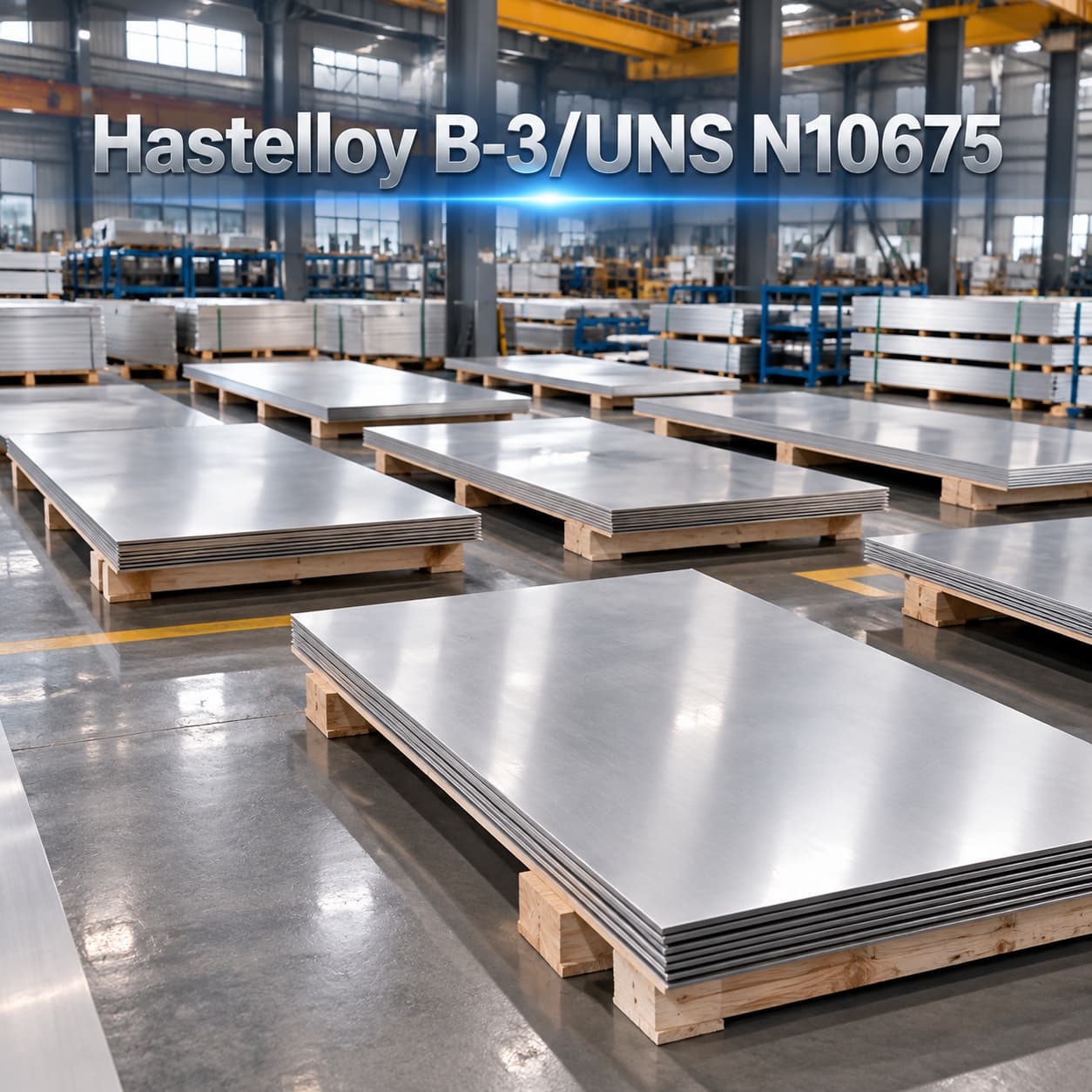
Grade: Hastelloy B-3/UNS N10675/Alloy B3
HASTELLOY B-3 alloy (UNS N10675) exhibits extremely high resistance to pure hydrochloric, hydrobromic, and sulfuric acids. Furthermore, it has greatly improved structural stability compared with previous B-type alloys, leading to fewer concerns during welding, fabrication, and service.
Like other nickel alloys (in the mill annealed condition), it is ductile, can be formed and welded, and resists stress corrosion cracking in chloride-bearing solutions. Also, it is able to withstand fluoride-bearing media and concentrated sulfuric acid, both of which result in damage to zirconium alloys.
HASTELLOY B-3 alloy is available in the form of plates, sheets, strips, billets, bars, wires, pipes, tubes, and coated electrodes. It is used in numerous chemical process industry (CPI) applications, especially in the construction of reaction vessels for pure, reducing acid service.
| Element | Content (%) |
| Nickel, Ni | 65 min |
| Molybdenum, Mo | 27-32 |
| Cobalt, Co | 3 max |
| Manganese, Mn | 3 max |
| Tungsten, W | 3 max |
| Iron, Fe | 1-3 |
| Chromium, Cr | 1-3 |
| Aluminum, Al | 0.5 max |
| Copper, Cu | 0.2 max |
| Niobium, Nb | 0.2 max |
| Tantalum, Ta | 0.2 max |
| Titanium, Ti | 0.2 max |
| Vanadium, V | 0.2 max |
| Zirconium, Zr | 0.1 max |
| Phosphorus, P | 0.03 max |
| Sulfur, S | 0.01 max |
| Carbon, C | 0.01 max |
Equivalent materials to HASTELLOY B-3 are
▪ ASTM B333
▪ ASTM B335
▪ ASTM B366
▪ ASTM B564
▪ ASTM B619
▪ ASTM B622
| Properties | Metric | Imperial |
| Tensile strength (0.125in.) | 0.88 GPa | 129 ksi |
| Yield strength (0.125in.) | 0.44 GPa | 64.5 ksi |
| Elongation at break (0.125in.) | 57.50% | 57.50% |
▪ Chemical processes
▪ Vacuum furnaces
▪ Mechanical components in reducing environments
HASTELLOY B-3 alloy (UNS N10675) exhibits extremely high resistance to pure hydrochloric, hydrobromic, and sulfuric acids. Furthermore, it has greatly improved structural stability compared with previous B-type alloys, leading to fewer concerns during welding, fabrication, and service.
Like other nickel alloys (in the mill annealed condition), it is ductile, can be formed and welded, and resists stress corrosion cracking in chloride-bearing solutions. Also, it is able to withstand fluoride-bearing media and concentrated sulfuric acid, both of which result in damage to zirconium alloys.
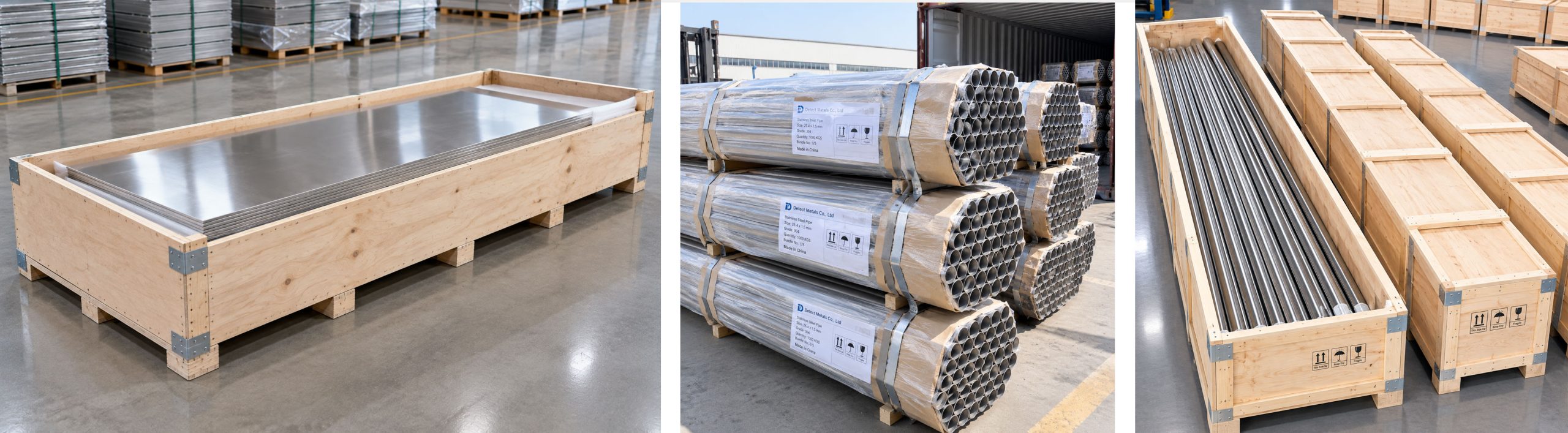
HASTELLOY B-3 alloy is available in the form of plates, sheets, strips, billets, bars, wires, pipes, tubes, and coated electrodes. It is used in numerous chemical process industry (CPI) applications, especially in the construction of reaction vessels for pure, reducing acid service.
| Element | Content (%) |
| Nickel, Ni | 65 min |
| Molybdenum, Mo | 27-32 |
| Cobalt, Co | 3 max |
| Manganese, Mn | 3 max |
| Tungsten, W | 3 max |
| Iron, Fe | 1-3 |
| Chromium, Cr | 1-3 |
| Aluminum, Al | 0.5 max |
| Copper, Cu | 0.2 max |
| Niobium, Nb | 0.2 max |
| Tantalum, Ta | 0.2 max |
| Titanium, Ti | 0.2 max |
| Vanadium, V | 0.2 max |
| Zirconium, Zr | 0.1 max |
| Phosphorus, P | 0.03 max |
| Sulfur, S | 0.01 max |
| Carbon, C | 0.01 max |
Equivalent materials to HASTELLOY B-3 are
▪ ASTM B333
▪ ASTM B335
▪ ASTM B366
▪ ASTM B564
▪ ASTM B619
▪ ASTM B622
| Properties | Metric | Imperial |
| Tensile strength (0.125in.) | 0.88 GPa | 129 ksi |
| Yield strength (0.125in.) | 0.44 GPa | 64.5 ksi |
| Elongation at break (0.125in.) | 57.50% | 57.50% |
▪ Chemical processes
▪ Vacuum furnaces
▪ Mechanical components in reducing environments
Related products
-
Incoloy
Alloy 840 / UNS N08840
-
Incoloy
Alloy 28 / UNS N08028
-
Nickel Alloy
Kovar/UNS K94610
-
Hastelloy
Alloy X/ UNS N06002
-
Hastelloy
Alloy C276/UNS N10276
-
Hastelloy
Alloy C-4/UNS N06455