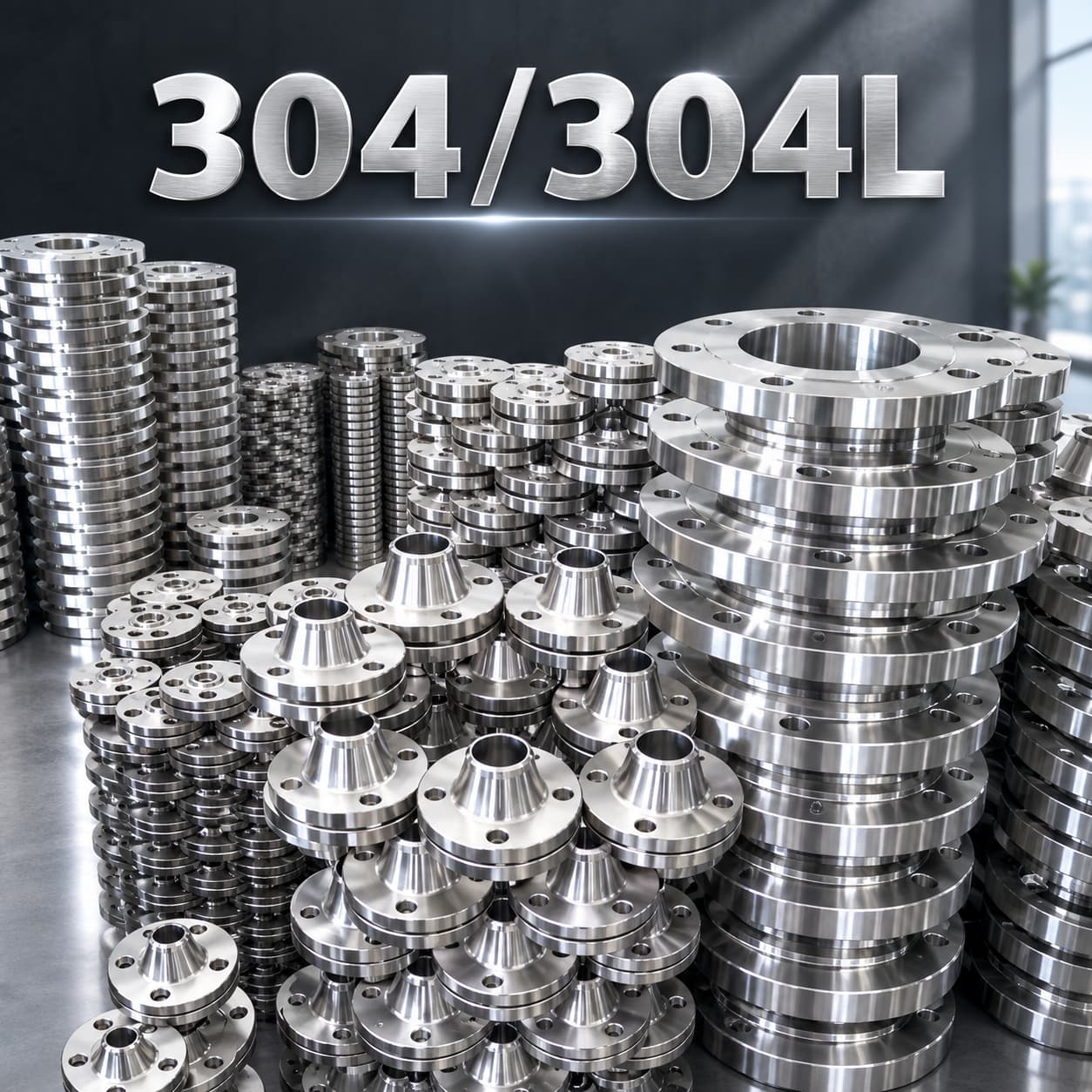
Grade: 304/304L
304 and 304L are versatile chromium-nickel austenitic stainless steels offering good general corrosion resistance, excellent formability and weldability. 304 is widely used for general industrial service, while the lower-carbon 304L grade is preferred for welded construction where reduced sensitization risk is important. These grades provide a strong balance of cost, availability, fabrication performance and corrosion resistance.
Chemical Composition
| Element | Specified / Typical Range (wt. %) |
| C | ≤0.07 / ≤0.030 |
| Mn | ≤2.00 |
| Si | ≤1.00 |
| P | ≤0.045 |
| S | ≤0.030 |
| Cr | 18.0–20.0 |
| Ni | 8.0–11.0 |
| Mo | — |
| N | ≤0.10 |
| Fe | Balance |
Note: Values are presented as representative ASTM A182 grade requirements. The applicable standard edition and material certificate govern the final chemical limits.
Mechanical Properties
| Property | Minimum / Requirement |
| Tensile Strength, min. | 515 MPa (F304) / 485 MPa (F304L) |
| Yield Strength, 0.2%, min. | 205 MPa (F304) / 170 MPa (F304L) |
| Elongation, min. | 30% |
| Hardness | As specified by applicable standard / product condition |
- Chemical and process piping
- Food, beverage and pharmaceutical equipment
- Water treatment and general utility piping
- Architectural and sanitary applications
- Heat exchangers and general industrial equipment
304 and 304L are versatile chromium-nickel austenitic stainless steels offering good general corrosion resistance, excellent formability and weldability. 304 is widely used for general industrial service, while the lower-carbon 304L grade is preferred for welded construction where reduced sensitization risk is important. These grades provide a strong balance of cost, availability, fabrication performance and corrosion resistance.
Chemical Composition
| Element | Specified / Typical Range (wt. %) |
| C | ≤0.07 / ≤0.030 |
| Mn | ≤2.00 |
| Si | ≤1.00 |
| P | ≤0.045 |
| S | ≤0.030 |
| Cr | 18.0–20.0 |
| Ni | 8.0–11.0 |
| Mo | — |
| N | ≤0.10 |
| Fe | Balance |
Note: Values are presented as representative ASTM A182 grade requirements. The applicable standard edition and material certificate govern the final chemical limits.
Mechanical Properties
| Property | Minimum / Requirement |
| Tensile Strength, min. | 515 MPa (F304) / 485 MPa (F304L) |
| Yield Strength, 0.2%, min. | 205 MPa (F304) / 170 MPa (F304L) |
| Elongation, min. | 30% |
| Hardness | As specified by applicable standard / product condition |
- Chemical and process piping
- Food, beverage and pharmaceutical equipment
- Water treatment and general utility piping
- Architectural and sanitary applications
- Heat exchangers and general industrial equipment
Related products
-
17-4 PH
630/17-4PH Stainless Steel Plate
-
300 Series Stainless Steel
304H Stainless Steel Plate
-
300 Series Stainless Steel
316/316L Stainless Steel Plate
-
Stainless Steel
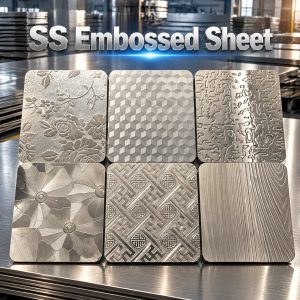
Stainless Steel Embossed Sheet
-
Stainless Steel
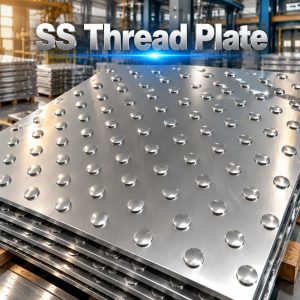
Stainless Steel Thread Plate
-
Stainless Steel
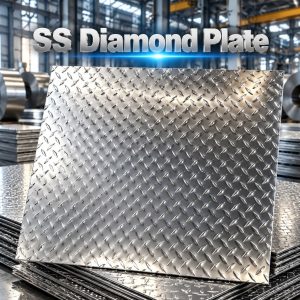
Stainless Steel Diamond Plate