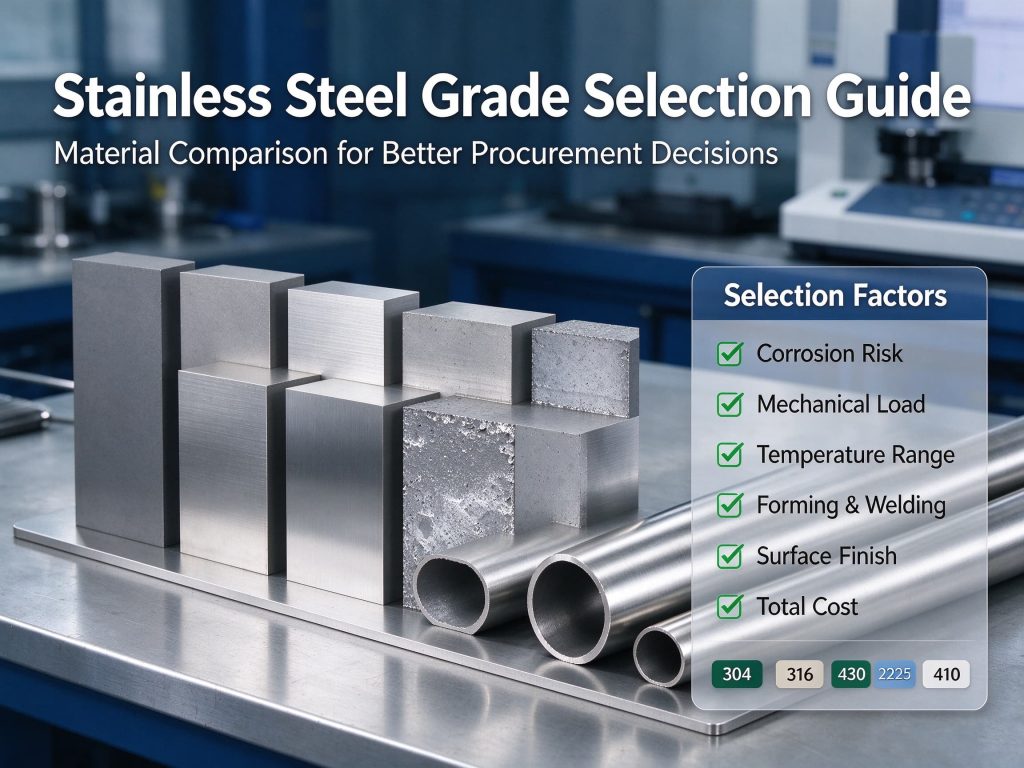
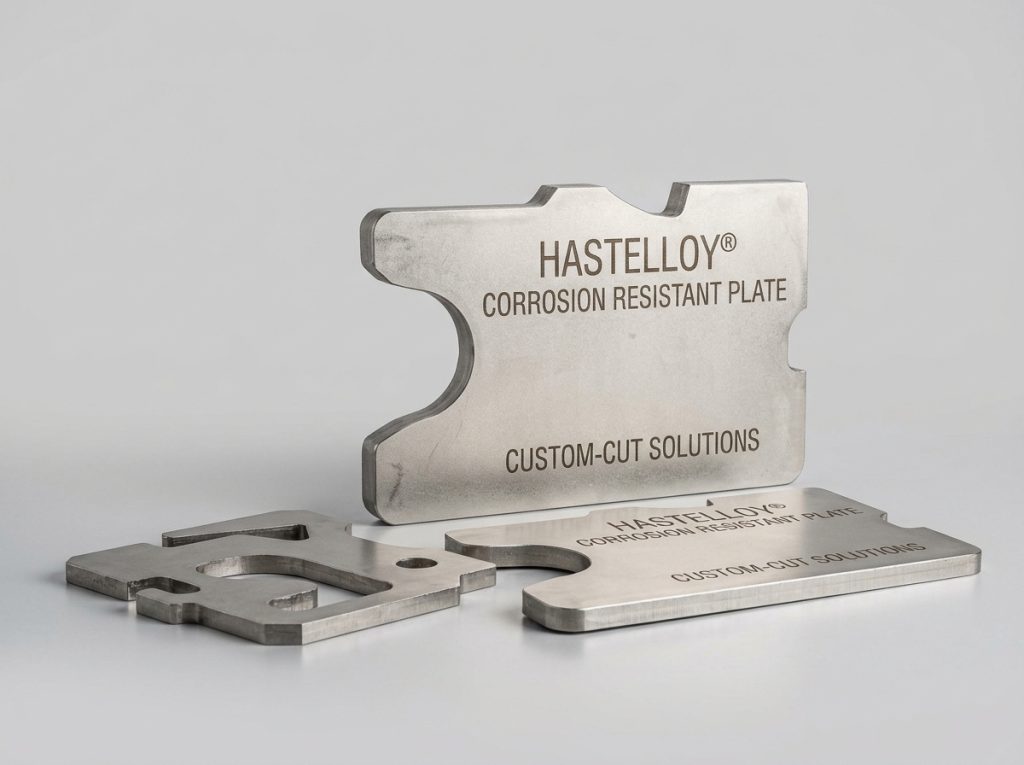
For engineers designing equipment for chemical processing, marine desalination, and oil and gas extraction, selecting the right high-performance material is a high-stakes decision. When confronting severe chloride stress corrosion cracking, aggressive acids, or high operating temperatures, the debate often narrows down to two heavyweight contenders: Super-Duplex Stainless Steels (such as UNS S32750 / 2507) and Nickel-Based Alloys (such as Hastelloy C-276 or Inconel 625).
Because nickel alloys carry a significant cost premium, project managers frequently ask: Is the nickel premium truly necessary, or is super-duplex “good enough”?
This guide breaks down the metallurgical, thermal, economic, and performance trade-offs to help you decide when to invest in nickel and when super-duplex fits the bill.
1. Metallurgy & Performance Profiles at a Glance
To understand where one material replaces the other, you must look at how their atomic structures handle stress and corrosion.
- Super-Duplex Stainless Steels: These alloys feature a balanced micro-structure of approximately 50% austenite and 50% ferrite. This dual-phase structure gives them exceptional mechanical strength (roughly double the yield strength of standard austenitic stainless steels) and high resistance to chloride stress corrosion cracking (SCC) and pitting (PREN typically > 40).
- Nickel-Based Alloys: Dominated by a stable austenitic face-centered cubic (FCC) matrix heavily alloyed with nickel, chromium, molybdenum, and tungsten. They do not rely on a dual-phase balance, making them immune to the high-temperature phase embrittlement issues that plague duplex grades, while offering vastly superior resistance in reducing chemical environments and extreme temperatures.
2. Key Engineering Trade-offs: 工况 (Operating Conditions)
Temperature Limits
- Super-Duplex: Strictly limited to service temperatures below 250°C to 300°C (482°F–572°F). Prolonged exposure to higher temperatures triggers the precipitation of deleterious intermetallic phases (such as sigma phase), causing catastrophic embrittlement and loss of corrosion resistance.
- Nickel Alloys: Excel at cryogenic temperatures all the way up to 600°C to 1000°C+ (1100°F–1832°F+). If your application involves high-temperature flue gases, thermal cycling, or high-temp sulfidation, nickel is the mandatory choice.
Chemical Aggressiveness (Oxidizing vs. Reducing)
- Super-Duplex: Highly effective in seawater, moderate chloride solutions, and oxidizing acid environments. However, they struggle against strong reducing acids like hydrochloric acid (HCl), hydrofluoric acid (HF), and concentrated sulfuric acid.
- Nickel Alloys: Specifically engineered for severe chemical hostility. Grades like Hastelloy C-276 are built to withstand wet chlorine, concentrated hydrochloric acid, and mixed acid streams containing ferric and cupric ions. When evaluating broader chemical process choices, reviewing detailed material frameworks like the nickel alloys in chemical processing guide helps clarify corrosion thresholds.
3. Cost vs. Lifecycle Economics: Is the Nickel Premium Worth It?
When purchasing raw materials, nickel alloys can cost anywhere from 2x to 4x more than super-duplex stainless steels. However, evaluating capital expenditure (CapEx) alone often results in premature equipment failure.
| Evaluation Metric | Super-Duplex Stainless Steel (e.g., 2507) | Nickel-Based Alloys (e.g., C-276 / 625) |
| Material Cost (CapEx) | Moderate to High | Very High (Driven by Ni and Mo content) |
| Mechanical Strength | Excellent (Allows thinner wall/weight savings) | Good to Moderate (Lower yield strength than duplex) |
| Max Service Temp | $\le 300^\circ\text{C}$ ($572^\circ\text{F}$) | Up to $1000^\circ\text{C}+$ ($1832^\circ\text{F}+$) |
| Fabrication & Welding | Requires strict heat input and interpass control | Requires careful thermal management and specialized filler metals |
| Primary Risk | Sigma phase embrittlement, localized crevice attack in hot acids | High initial material cost |
The Total Cost of Ownership (TCO) Calculation
- When Super-Duplex Wins: In offshore seawater cooling loops, desalination plants, and moderate chloride heat exchangers operating under 250°C, super-duplex offers superior yield strength (allowing thinner, lighter wall thicknesses) at a fraction of the cost of nickel alloys.
- When Nickel Wins: If downtime in a chemical reactor costs tens of thousands of dollars per hour, saving money upfront on super-duplex is a false economy. For instance, in mixed-acid environments or high-temperature sour gas wells where super-duplex would suffer rapid localized pitting or stress corrosion, paying the nickel premium ensures multi-year reliability without unexpected shutdowns.
4. Decision Framework for Engineers
To resolve the “is nickel necessary?” dilemma, run through this quick engineering checklist:
- What is the peak operating temperature? If it exceeds 300°C (572°F), rule out super-duplex immediately and specify a nickel-based superalloy (or Incoloy/Inconel grade depending on oxidation resistance).
- Are reducing acids or wet halogen gases present? If hydrochloric, hydrofluoric, or aggressive organic acids are in the stream, super-duplex will corrode rapidly. Choose a nickel-molybdenum or nickel-chromium-molybdenum alloy. For a deeper dive into matching specific families, consult our breakdown on Inconel vs. Hastelloy vs. Monel vs. Incoloy.
- Can mechanical design leverage higher strength? If the equipment is pressure-vessel or structural piping where high yield strength allows material reduction and weight savings, super-duplex is an exceptional choice—provided temperature and chemical limits are respected.
Conclusion
Super-duplex stainless steel is a remarkable engineering material that bridges the gap between standard austenitic stainless steels and expensive nickel alloys for many marine and moderate chemical applications. However, it is not a universal substitute. When operating conditions push past thermal thresholds or into severe reducing acid environments, the nickel premium transitions from an added expense to an absolute operational necessity.
The video below demonstrates material testing and welding response differences between high-alloy stainless and nickel-based grades.