Power generation plants operate under some of the most punishing material conditions in industry. High temperatures, corrosive flue gases, high-pressure steam, and aggressive water chemistry combine to test the limits of every metal component. When equipment fails, the consequences are expensive: lost megawatts, forced outages, and costly emergency repairs. Nickel-based superalloys have become indispensable in modern power generation precisely because they maintain strength and corrosion resistance at temperatures and pressures where other metals soften, oxidize, or crack.
From coal-fired boilers to nuclear reactors and next-generation concentrated solar power, nickel alloys enable higher efficiency, longer service intervals, and safer plant operation. In this article, we examine the key roles nickel alloys play across power generation sectors and which grades are specified for critical components.
Why Power Generation Demands Nickel Alloys
Power plants push materials to extremes on multiple fronts simultaneously:
- High temperatures: Superheater and reheater tubes can exceed 650°C in advanced ultrasupercritical (AUSC) coal plants
- High pressure: Steam pressures in modern boilers reach 250 bar and above
- Corrosive environments: Flue gases containing sulfur, chlorine, and vanadium; high-purity steam; corrosive feedwater chemistry
- Thermal cycling: Frequent startup and shutdown cycles cause thermal fatigue
- Radiation: Nuclear environments add neutron irradiation effects
No single conventional material can handle all of these conditions. Nickel alloys are uniquely capable because their metallurgy is engineered to retain tensile strength, creep resistance, and corrosion protection at extreme temperatures.
Nickel Alloys in Fossil Fuel Power Plants
Coal, natural gas, and oil-fired power plants are the largest industrial consumers of nickel alloys after aerospace. Key applications include:
Boiler Tubes & Superheaters In conventional subcritical boilers, stainless steel tubes are common. But as plants upgrade to higher steam temperatures for improved efficiency, stainless steel reaches its thermal limit around 600°C. Nickel alloys step in for ultrasupercritical (USC) and advanced ultrasupercritical (AUSC) boilers operating at 700°C+.
- Inconel 617, Inconel 740, Incoloy 800HT are leading candidates for AUSC superheater and reheater tubing, offering excellent creep rupture strength and steam-side oxidation resistance.
- Benefits: Enable higher thermal efficiency (48%+ vs. ~38% for subcritical plants), lower CO₂ emissions per megawatt, and extended tube life.
Flue Gas Desulfurization (FGD) Systems Scrubbers that remove sulfur dioxide from exhaust gases create an extremely corrosive environment of hot, acidic condensate. Carbon steel and even 316L stainless steel corrode rapidly here.
- Hastelloy C276 and Hastelloy C22 are industry-standard FGD materials, offering exceptional resistance to sulfuric acid, chloride pitting, and stress corrosion cracking.
- Used for: Scrubber internals, absorber towers, duct liners, slurry piping, and spray nozzles.
Gas Turbine Components Natural gas combined-cycle (NGCC) plants rely on gas turbines for primary power generation. The hottest sections of these turbines—combustors, transition pieces, and turbine blades—depend on nickel superalloys.
- Inconel 738, Inconel 792, Hastelloy X are widely used for combustion hardware and stationary turbine components.
- These alloys resist thermal fatigue, hot corrosion from fuel impurities, and high-temperature oxidation.
Nickel Alloys in Nuclear Power Generation
Nuclear power imposes the strictest material requirements of any industry. Components must perform reliably for 40–60+ years under neutron irradiation, high temperature, and high-pressure primary coolant water.
Steam Generator Tubes Steam generators are the heart of pressurized water reactors (PWRs). Thousands of thin-walled tubes transfer heat from the radioactive primary coolant to the secondary steam loop.
- Inconel 600 and Inconel 690 are the dominant tube materials. Alloy 690, with higher chromium content, offers improved corrosion resistance and has become the standard for new-build and replacement steam generators.
- These alloys resist primary water stress corrosion cracking (PWSCC), maintain dimensional stability under irradiation, and provide excellent heat transfer properties.
Reactor Internals & Control Rod Drive Mechanisms Core structural components, control rod guide tubes, and fasteners require high strength, low neutron absorption, and dimensional stability over decades of service.
- Inconel X-750 is widely used for springs, fasteners, and elastic components in reactor internals due to its high strength and radiation resistance.
- Incoloy 800 is used for heat exchanger tubing and structural components in boiling water reactors (BWRs).
Nickel Alloys in Concentrated Solar Power (CSP)
Concentrated solar power plants with molten salt storage represent a fast-growing renewable energy sector. These plants heat molten salt mixtures to 565°C or higher to generate steam around the clock.
- Inconel 625 and Haynes 230 are used for receiver tubes and molten salt piping, where they must resist high-temperature oxidation and molten salt corrosion.
- Nickel alloys enable higher operating temperatures, which directly translates to higher power cycle efficiency and lower energy storage cost.
Key Nickel Alloy Grades for Power Generation Summary
| Alloy Family | Key Grades | Primary Power Gen Applications |
|---|---|---|
| Inconel | 600, 625, 718, 617, 740 | Superheater tubes, gas turbine components, nuclear steam generator tubes, reactor internals |
| Hastelloy | C276, C22, X | FGD scrubbers, flue gas ducts, gas turbine combustors, acidic environments |
| Incoloy | 800H/HT, 825 | Boiler tubing, heat exchangers, moderate-temperature process piping |
The Efficiency Driver: Why Nickel Alloys Are Essential for the Energy Transition
The global push for lower-carbon power generation directly increases demand for nickel alloys. Higher-efficiency fossil plants, advanced nuclear reactors, and next-generation CSP all require materials that can operate at higher temperatures. Nickel superalloys are the only materials that can meet these demands today.
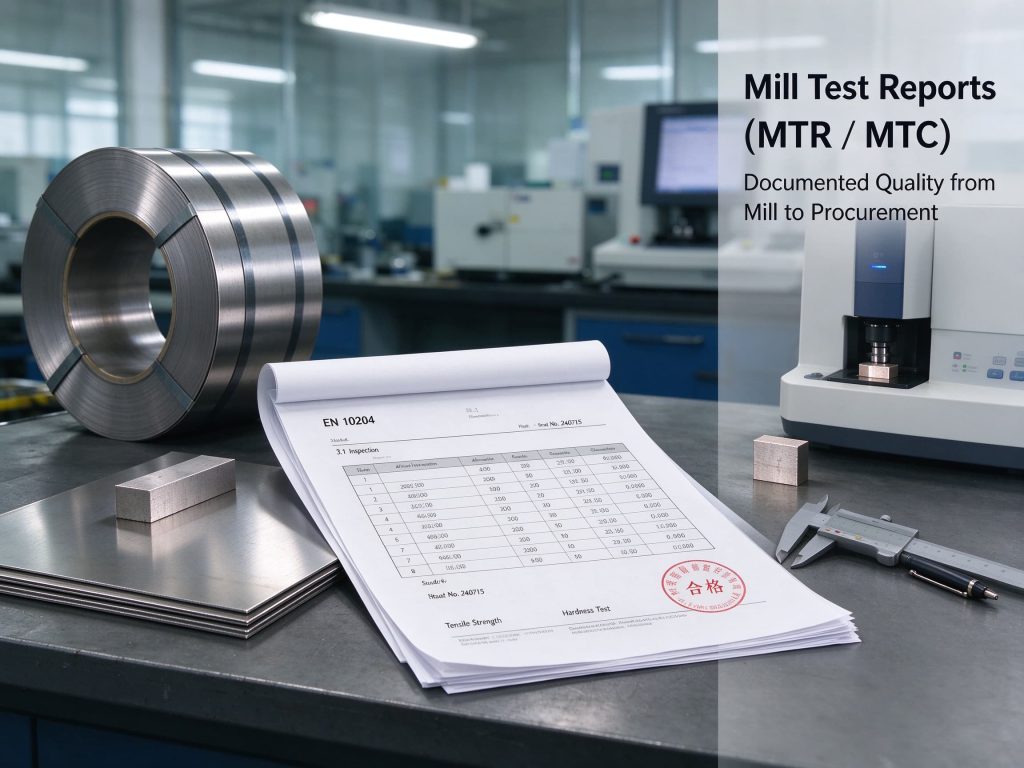
At Detect Metals, we supply power generation-grade nickel alloys to utilities, EPC contractors, boiler manufacturers, and component fabricators worldwide. All our material comes with full mill test certificates and meets ASTM, ASME, and applicable nuclear-grade specifications. We stock plate, sheet, bar, seamless tube, and pipe in all standard power generation grades, with custom cutting and precision machining available to reduce your in-house processing time.
Whether you’re planning a boiler upgrade, FGD retrofit, or component replacement, our technical team can help you select the right alloy for your operating conditions. Contact Detect Metals today for a competitive quote on your power generation nickel alloy requirements.