Grade: 321
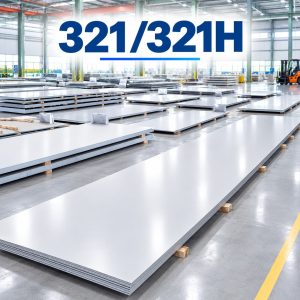
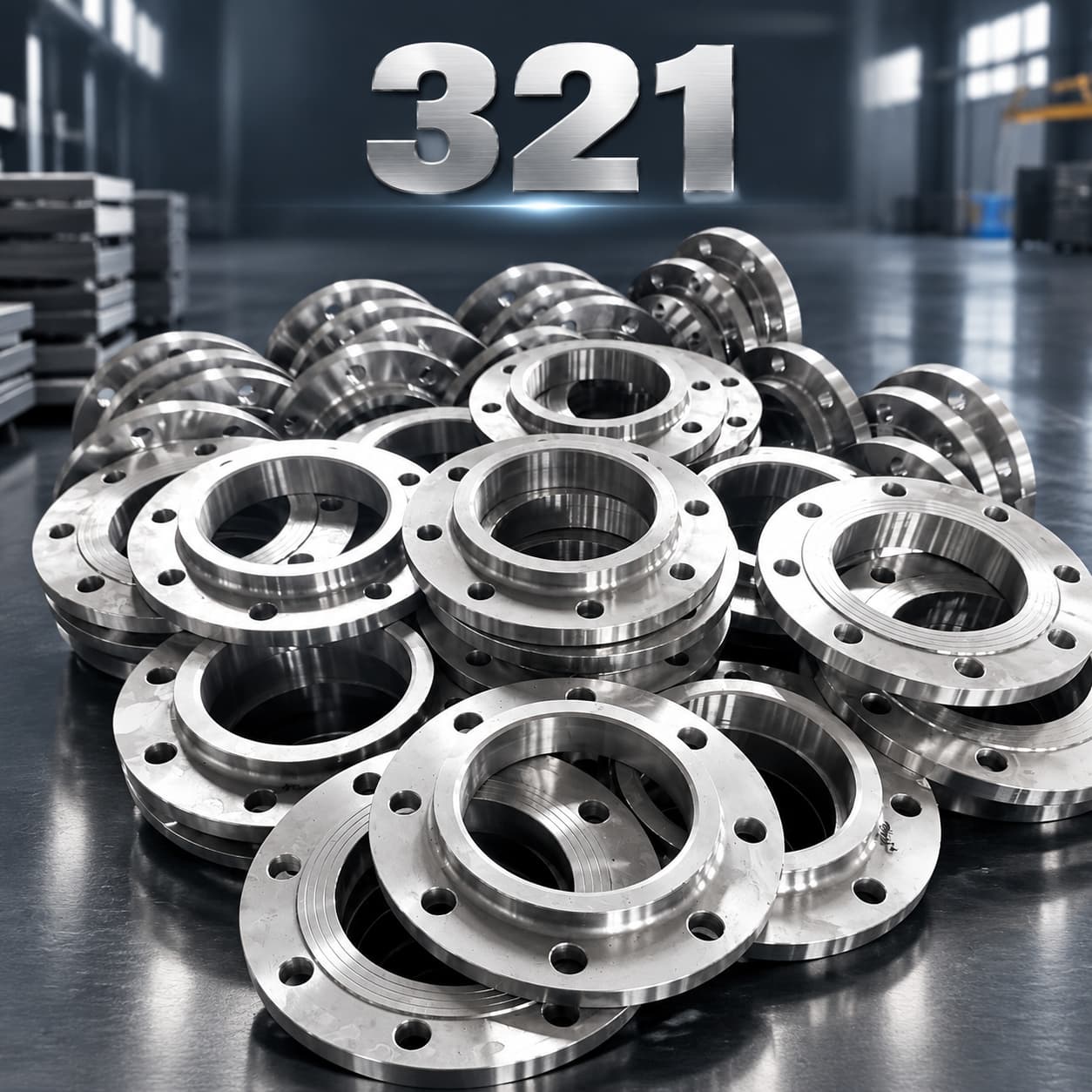
321 is a titanium-stabilized austenitic stainless steel based on 304 chemistry. Titanium binds carbon and helps reduce chromium carbide precipitation during exposure to elevated temperatures. It is therefore useful for welded components and piping that experience elevated service temperatures. 321 combines good general corrosion resistance with good high-temperature stability and is frequently selected for thermal processing and exhaust-related applications.
Chemical Composition
| Element | Specified / Typical Range (wt. %) |
| C | ≤0.08 |
| Mn | ≤2.00 |
| Si | ≤1.00 |
| P | ≤0.045 |
| S | ≤0.030 |
| Cr | 17.0–19.0 |
| Ni | 9.0–12.0 |
| Mo | — |
| N | ≤0.10 |
| Ti | ≥5×C; ≤0.70 |
| Fe | Balance |
Note: Values are presented as representative ASTM A182 grade requirements. The applicable standard edition and material certificate govern the final chemical limits.
Mechanical Properties
| Property | Minimum / Requirement |
| Tensile Strength, min. | 515 MPa |
| Yield Strength, 0.2%, min. | 205 MPa |
| Elongation, min. | 30% |
| Hardness | As specified by applicable standard / product condition |
- High-temperature process piping
- Heat exchangers and thermal equipment
- Petrochemical and refinery systems
- Furnace and exhaust components
- Welded piping exposed to elevated temperatures
321 is a titanium-stabilized austenitic stainless steel based on 304 chemistry. Titanium binds carbon and helps reduce chromium carbide precipitation during exposure to elevated temperatures. It is therefore useful for welded components and piping that experience elevated service temperatures. 321 combines good general corrosion resistance with good high-temperature stability and is frequently selected for thermal processing and exhaust-related applications.
Chemical Composition
| Element | Specified / Typical Range (wt. %) |
| C | ≤0.08 |
| Mn | ≤2.00 |
| Si | ≤1.00 |
| P | ≤0.045 |
| S | ≤0.030 |
| Cr | 17.0–19.0 |
| Ni | 9.0–12.0 |
| Mo | — |
| N | ≤0.10 |
| Ti | ≥5×C; ≤0.70 |
| Fe | Balance |
Note: Values are presented as representative ASTM A182 grade requirements. The applicable standard edition and material certificate govern the final chemical limits.
Mechanical Properties
| Property | Minimum / Requirement |
| Tensile Strength, min. | 515 MPa |
| Yield Strength, 0.2%, min. | 205 MPa |
| Elongation, min. | 30% |
| Hardness | As specified by applicable standard / product condition |
- High-temperature process piping
- Heat exchangers and thermal equipment
- Petrochemical and refinery systems
- Furnace and exhaust components
- Welded piping exposed to elevated temperatures
Related products
-
Duplex Stainless Steel
329 Duplex Stainless Steel Plate
-
2205 Stainless Steel
2205/S32205 Stainless Steel Plate
-
300 Series Stainless Steel
347/347H Stainless Steel Plate
-
300 Series Stainless Steel
317/317L Stainless Steel Plate
-
300 Series Stainless Steel
321/321H Stainless Steel Plate
-
Stainless Steel
Stainless Steel Thread Plate