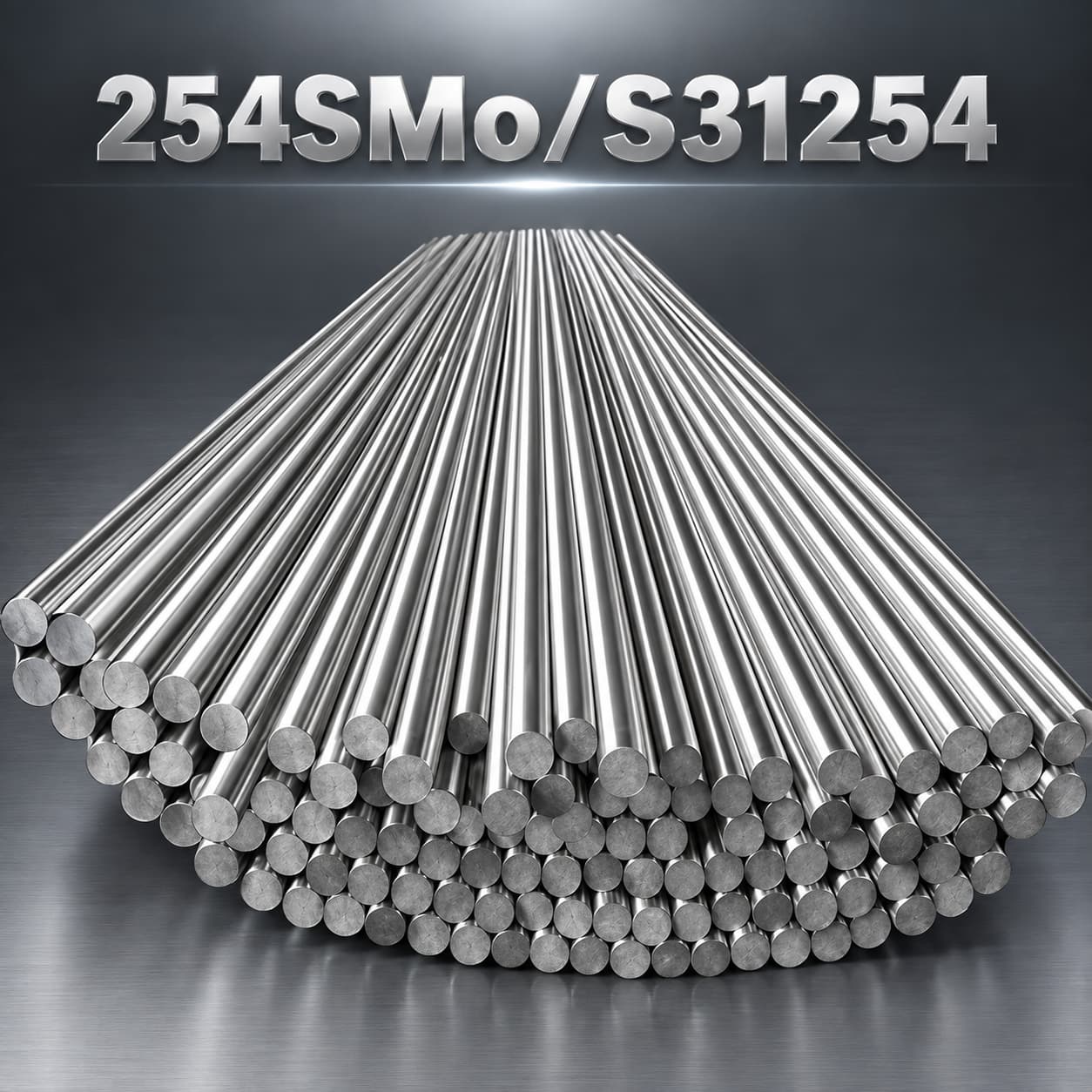
Grade:254SMO/UNS S31254
254 SMO stainless steel is a high-alloy austenitic super stainless steel grade designated as UNS S31254. It was developed specifically for applications requiring extremely high resistance to chloride-induced corrosion, pitting, crevice corrosion, and stress corrosion cracking. The alloy is classified as a super austenitic stainless steel because of its high chromium, nickel, molybdenum, and nitrogen content, providing corrosion resistance significantly superior to conventional grades such as 316L.
The alloy contains approximately 20% chromium, 18% nickel, 6% molybdenum, and a controlled amount of nitrogen. The high molybdenum content greatly improves resistance to localized corrosion, while nitrogen increases strength and enhances resistance to pitting corrosion. The combination of chromium, molybdenum, and nitrogen results in a very high Pitting Resistance Equivalent Number (PREN), typically above 42, making 254 SMO suitable for highly aggressive chloride environments.
254 SMO stainless steel bars provide excellent resistance to seawater, brackish water, and chemical processing environments. Compared with 904L stainless steel, 254 SMO offers higher molybdenum content and superior resistance to pitting and crevice corrosion. Compared with 316L stainless steel, it provides significantly improved corrosion performance, especially in warm seawater and chloride-containing solutions.
The material maintains excellent toughness, ductility, and weldability due to its fully austenitic structure and low carbon content. 254 SMO stainless steel bars are normally supplied in solution annealed condition to maintain optimal corrosion resistance and mechanical properties. The alloy requires controlled fabrication procedures to avoid contamination and maintain its high corrosion performance.
254 SMO stainless steel bars are widely used in seawater systems, desalination plants, chemical processing equipment, pharmaceutical equipment, pollution control systems, heat exchangers, pulp and paper equipment, and offshore applications where extreme corrosion resistance is required.
ASTM / JIS / EN Standards
| Standard System | Standard / Grade | Description |
| ASTM | ASTM A276 / A276M – UNS S31254 | Stainless Steel Bars and Shapes |
| ASTM | ASTM A479 / A479M – UNS S31254 | Stainless Steel Bars for Pressure Equipment |
| ASTM | ASTM A182 – UNS S31254 | Forged Stainless Steel Components |
| UNS | S31254 | 254 SMO Super Austenitic Stainless Steel |
| JIS | SUS312L (Comparable) | High Alloy Austenitic Stainless Steel |
| EN | EN 10088-3 1.4547 | X1CrNiMoCuN20-18-7 Stainless Steel |
| DIN | DIN 1.4547 | Equivalent European Material Designation |
Stainless Steel Bar Execution Standards
| Item | Specification |
| Product Type | Round Bar, Square Bar, Hexagonal Bar |
| Manufacturing Process | Hot Rolled, Cold Drawn, Peeled, Ground, Polished |
| Heat Treatment | Solution Annealing |
| Solution Treatment Temperature | Approximately 1150–1200°C followed by rapid cooling |
| Microstructure | Fully Austenitic |
| Surface Condition | Black Surface, Bright Surface, Ground Surface, Polished Surface |
| Dimensional Tolerance | According to ASTM A276 / ASTM A479 |
| Inspection | Chemical Analysis, Mechanical Testing, Pitting Resistance Testing, Dimensional Inspection |
| Supply Condition | Solution Annealed Condition |
Chemical Composition (%)
| Element | Composition Requirement |
| Carbon (C) | ≤ 0.020 |
| Silicon (Si) | ≤ 0.80 |
| Manganese (Mn) | ≤ 1.00 |
| Phosphorus (P) | ≤ 0.030 |
| Sulfur (S) | ≤ 0.010 |
| Chromium (Cr) | 19.50 – 20.50 |
| Nickel (Ni) | 17.50 – 18.50 |
| Molybdenum (Mo) | 6.00 – 6.50 |
| Copper (Cu) | 0.50 – 1.00 |
| Nitrogen (N) | 0.18 – 0.22 |
| Iron (Fe) | Balance |
Mechanical Properties
Solution Annealed Condition
| Property | Requirement |
| Tensile Strength | ≥ 650 MPa |
| Yield Strength (0.2% Offset) | ≥ 300 MPa |
| Elongation | ≥ 35% |
| Hardness | ≤ 300 HB |
| Condition | Solution Annealed |
| Industry | Applications |
| Marine Industry | Seawater piping, pumps, heat exchangers, offshore equipment |
| Desalination Industry | Reverse osmosis systems, high-pressure seawater equipment |
| Chemical Industry | Reactors, storage tanks, process piping |
| Pharmaceutical Industry | High-purity processing equipment |
| Pollution Control | Flue gas scrubbers, wastewater treatment equipment |
| Pulp & Paper Industry | Bleaching equipment and process systems |
| Oil & Gas Industry | Offshore corrosion-resistant components |
254 SMO stainless steel is a high-alloy austenitic super stainless steel grade designated as UNS S31254. It was developed specifically for applications requiring extremely high resistance to chloride-induced corrosion, pitting, crevice corrosion, and stress corrosion cracking. The alloy is classified as a super austenitic stainless steel because of its high chromium, nickel, molybdenum, and nitrogen content, providing corrosion resistance significantly superior to conventional grades such as 316L.
The alloy contains approximately 20% chromium, 18% nickel, 6% molybdenum, and a controlled amount of nitrogen. The high molybdenum content greatly improves resistance to localized corrosion, while nitrogen increases strength and enhances resistance to pitting corrosion. The combination of chromium, molybdenum, and nitrogen results in a very high Pitting Resistance Equivalent Number (PREN), typically above 42, making 254 SMO suitable for highly aggressive chloride environments.
254 SMO stainless steel bars provide excellent resistance to seawater, brackish water, and chemical processing environments. Compared with 904L stainless steel, 254 SMO offers higher molybdenum content and superior resistance to pitting and crevice corrosion. Compared with 316L stainless steel, it provides significantly improved corrosion performance, especially in warm seawater and chloride-containing solutions.
The material maintains excellent toughness, ductility, and weldability due to its fully austenitic structure and low carbon content. 254 SMO stainless steel bars are normally supplied in solution annealed condition to maintain optimal corrosion resistance and mechanical properties. The alloy requires controlled fabrication procedures to avoid contamination and maintain its high corrosion performance.
254 SMO stainless steel bars are widely used in seawater systems, desalination plants, chemical processing equipment, pharmaceutical equipment, pollution control systems, heat exchangers, pulp and paper equipment, and offshore applications where extreme corrosion resistance is required.
ASTM / JIS / EN Standards
| Standard System | Standard / Grade | Description |
| ASTM | ASTM A276 / A276M – UNS S31254 | Stainless Steel Bars and Shapes |
| ASTM | ASTM A479 / A479M – UNS S31254 | Stainless Steel Bars for Pressure Equipment |
| ASTM | ASTM A182 – UNS S31254 | Forged Stainless Steel Components |
| UNS | S31254 | 254 SMO Super Austenitic Stainless Steel |
| JIS | SUS312L (Comparable) | High Alloy Austenitic Stainless Steel |
| EN | EN 10088-3 1.4547 | X1CrNiMoCuN20-18-7 Stainless Steel |
| DIN | DIN 1.4547 | Equivalent European Material Designation |
Stainless Steel Bar Execution Standards
| Item | Specification |
| Product Type | Round Bar, Square Bar, Hexagonal Bar |
| Manufacturing Process | Hot Rolled, Cold Drawn, Peeled, Ground, Polished |
| Heat Treatment | Solution Annealing |
| Solution Treatment Temperature | Approximately 1150–1200°C followed by rapid cooling |
| Microstructure | Fully Austenitic |
| Surface Condition | Black Surface, Bright Surface, Ground Surface, Polished Surface |
| Dimensional Tolerance | According to ASTM A276 / ASTM A479 |
| Inspection | Chemical Analysis, Mechanical Testing, Pitting Resistance Testing, Dimensional Inspection |
| Supply Condition | Solution Annealed Condition |
Chemical Composition (%)
| Element | Composition Requirement |
| Carbon (C) | ≤ 0.020 |
| Silicon (Si) | ≤ 0.80 |
| Manganese (Mn) | ≤ 1.00 |
| Phosphorus (P) | ≤ 0.030 |
| Sulfur (S) | ≤ 0.010 |
| Chromium (Cr) | 19.50 – 20.50 |
| Nickel (Ni) | 17.50 – 18.50 |
| Molybdenum (Mo) | 6.00 – 6.50 |
| Copper (Cu) | 0.50 – 1.00 |
| Nitrogen (N) | 0.18 – 0.22 |
| Iron (Fe) | Balance |
Mechanical Properties
Solution Annealed Condition
| Property | Requirement |
| Tensile Strength | ≥ 650 MPa |
| Yield Strength (0.2% Offset) | ≥ 300 MPa |
| Elongation | ≥ 35% |
| Hardness | ≤ 300 HB |
| Condition | Solution Annealed |
| Industry | Applications |
| Marine Industry | Seawater piping, pumps, heat exchangers, offshore equipment |
| Desalination Industry | Reverse osmosis systems, high-pressure seawater equipment |
| Chemical Industry | Reactors, storage tanks, process piping |
| Pharmaceutical Industry | High-purity processing equipment |
| Pollution Control | Flue gas scrubbers, wastewater treatment equipment |
| Pulp & Paper Industry | Bleaching equipment and process systems |
| Oil & Gas Industry | Offshore corrosion-resistant components |