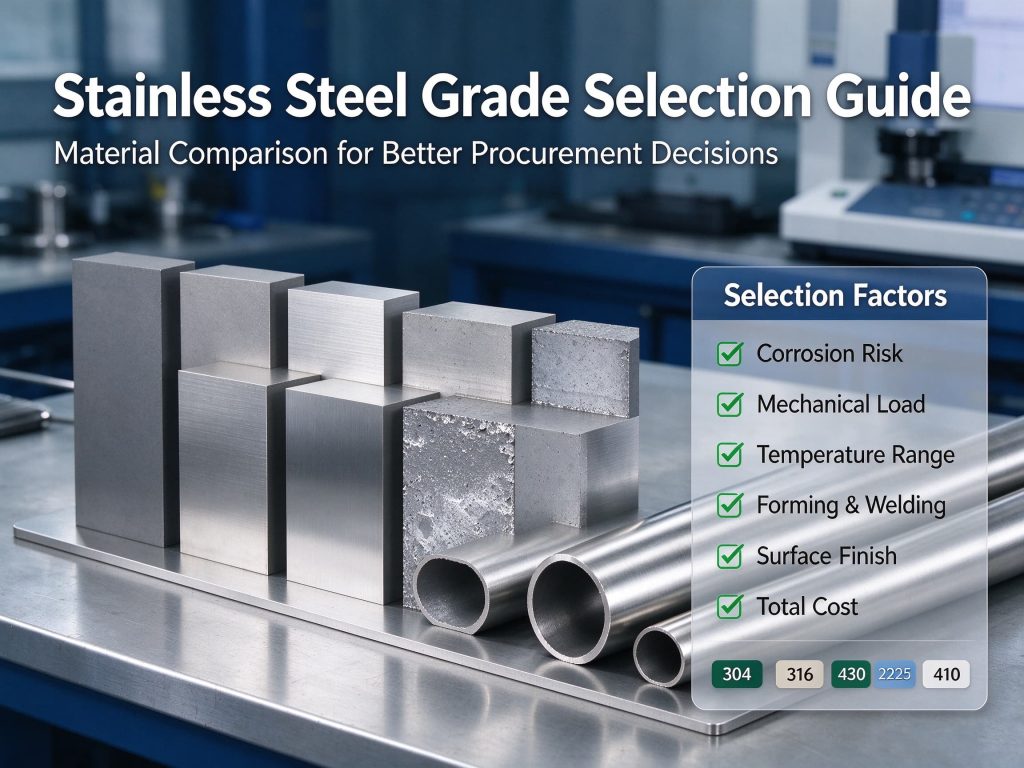
Duplex stainless steel 2205 (UNS S32205 / S31803, 1.4462) is the most widely‑used standard‑grade duplex stainless steel. Its microstructure contains roughly equal shares of ferrite and austenite phases, combining high mechanical strength and excellent chloride‑resistant corrosion performance that common austenitic grades such as 316L cannot match.
Compared with 316L austenitic stainless steel, grade 2205 delivers approximately double yield strength, allowing thinner‑wall component design to reduce total material weight and project cost. Meanwhile it provides far better resistance to chloride‑induced stress‑corrosion cracking, pitting and crevice corrosion.
Nevertheless, duplex 2205 also has clear limits: long‑term continuous service temperature should stay below 250‑300 °C; welding requires strict heat‑input control; ductility and cold‑forming performance are lower than classic austenitic stainless steel grades.
Main Industry Applications for Duplex 2205
1. Oil & Gas and Offshore Marine Projects
This is one of the largest application fields for 2205 duplex steel.
- Off‑shore platform process piping, fire‑water pipelines, risers and subsea auxiliary equipment
- On‑site oil‑field heat exchangers, separator internals and sour‑service piping complying with NACE MR0175 standards
- Seawater intake and circulation piping for offshore facilities
- Chemical tanker cargo tanks and ship‑board process components
2. Desalination & Water Treatment Plants
Seawater reverse‑osmosis (SWRO) desalination systems face heavy chloride corrosion threats. Duplex 2205 is widely selected for:
- High‑pressure RO membrane housings, brine heat‑exchanger tubes
- Seawater intake pumps, valve bodies and process piping
- Waste‑water treatment facilities handling chloride‑rich brine effluent
3. Chemical & Petrochemical Processing
For pressure‑bearing equipment working with chloride, sulphide or dilute acid media:
- Chemical pressure vessels, reactors, storage tanks and heat exchangers
- Piping for phosphoric acid, nitric acid and organic‑acid processing lines
- Flue‑gas desulfurization (FGD) scrubber internals for power‑plant emission‑control systems
Thanks to its higher strength, designers can adopt thinner wall thickness for pressure vessels compared with 316L, achieving cost‑saving without sacrificing safety margins.
4. Pulp & Paper Manufacturing
Paper‑mill bleach plants, digesters and black‑/white‑liquor processing equipment suffer combined erosion and chloride‑corrosion conditions. Duplex 2205 serves for digester vessels, bleach washers and related process piping, extending equipment service life versus traditional austenitic stainless grades.
5. General Industrial & Structural Applications
- High‑strength bolts, fasteners, valve and pump components in corrosive working conditions
- Biogas production reactor vessels and process pipelines
- Marine architectural structures, walk‑ways and bridge components exposed to coastal salt‑spray atmosphere
- Selected food‑processing equipment where both hygiene and chloride‑corrosion resistance are required
When you should NOT select Duplex 2205
- For long‑term service above 300 °C: phase transformation risk will sharply drop toughness and corrosion resistance.
- For complex deep‑drawing cold‑forming workpieces: 2205 has poorer ductility than 316L.
- For cryogenic applications below −50 °C: austenitic stainless steels perform better for low‑temperature toughness.
Quick material‑selection summary
Pick duplex 2205 if you need:
✅ Higher mechanical strength than 316L
✅ Strong resistance to chloride‑induced pitting & stress‑corrosion cracking
✅ Cost balance between ordinary austenitic stainless steel and expensive nickel‑base superalloys
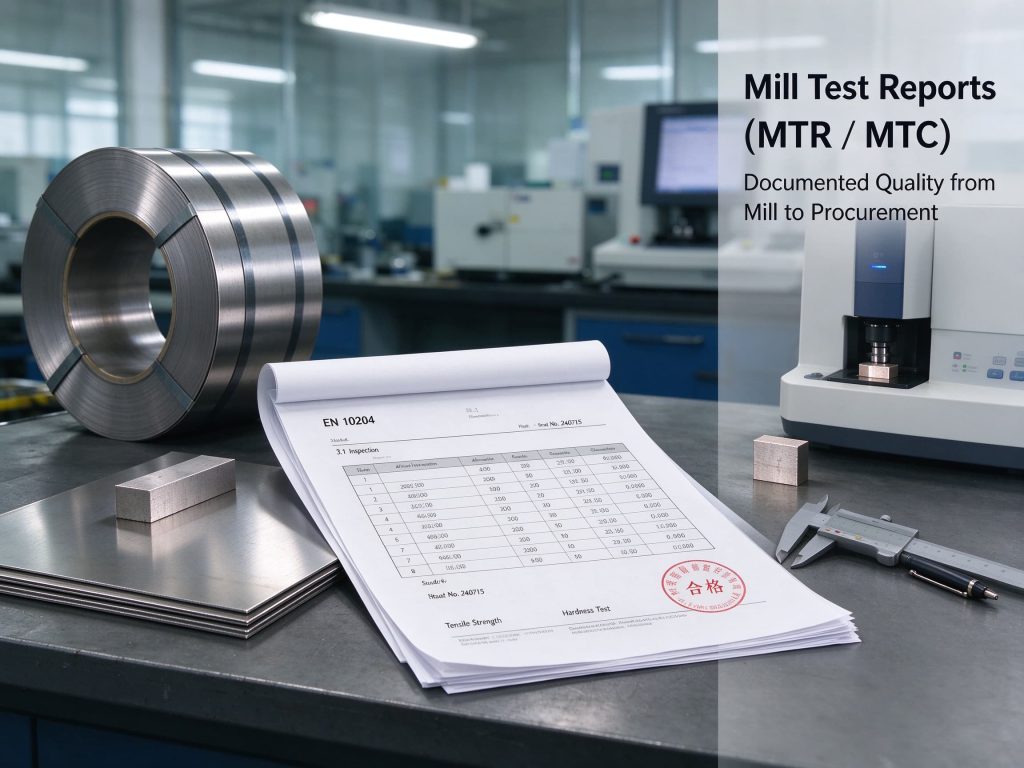
Detect Metals supplies duplex 2205 sheet, plate, pipe, bar, fittings and custom‑cut components with full MTC test certificates. Reach out for your project quote.